
US strike hits Iran’s Cobra V8 electronic warfare system near the Persian Gulf
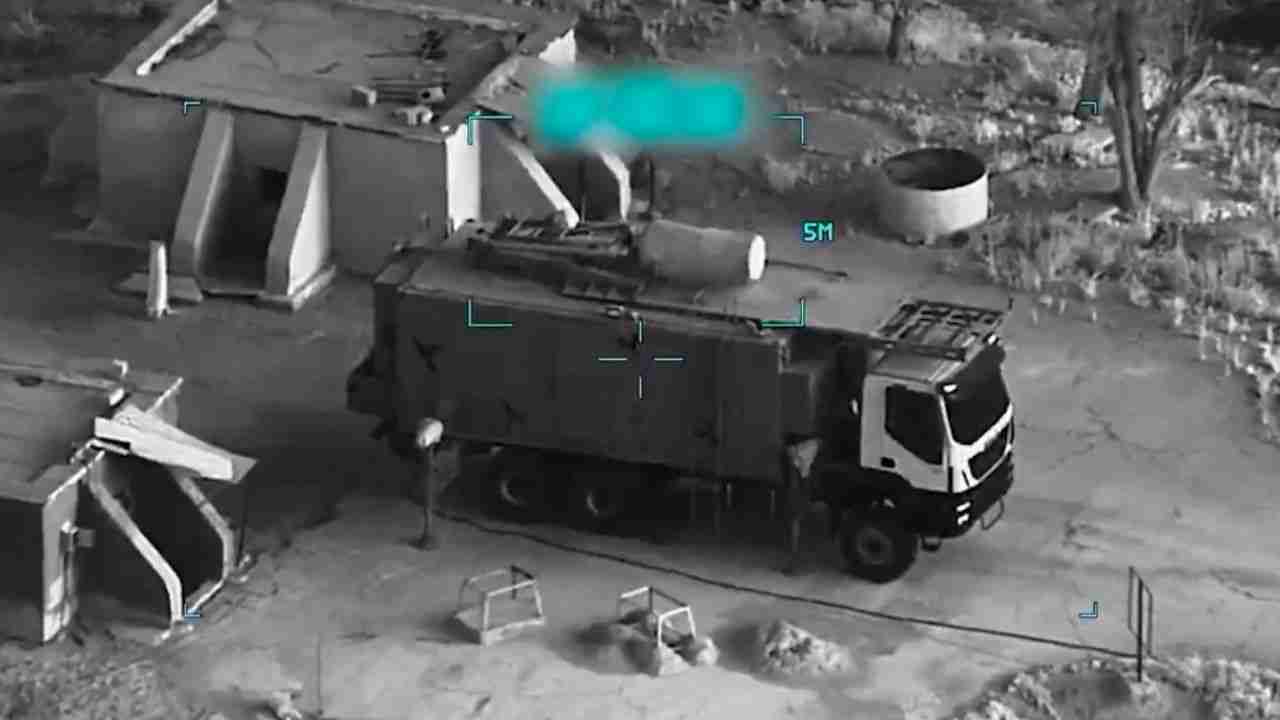
A U.S. airstrike carried out against Iranian military installations reportedly destroyed an advanced electronic warfare system Cobra V8 near the city of Bandar Imam Khomeini, in the province of Khuzestan.
Images released by the U.S. Central Command indicate that the equipment was installed at an air defense base with surface-to-air missiles, located near the northern coast of the Persian Gulf.
The system was identified by open-source intelligence analysts who examined frames from the video released by the U.S. military. According to these analyses, the Cobra V8 had already been previously located at that same installation before the conflict began, indicating that the base housed multiple units of the equipment.
Experts believe the Cobra V8 is an electronic warfare platform developed by Iran based on the Russian Krasukha-4 technology. The system is designed to interfere with radars and sensors from surveillance aircraft, drones, and other reconnaissance assets, allowing it to block or distort signals used for intelligence gathering.
Reports indicate that the platform can intercept and neutralize radar signals at distances of up to about 250 kilometers, depending on operational conditions. Systems of this type are considered strategic in modern conflicts because they hinder enemy aerial surveillance and can disrupt the coordination of precision strikes. Despite the technological similarities, Russia and Iran have never officially confirmed the participation of Russian specialists in the development of the Cobra V8.
Source: Defence Blog | Photo: X @CENTCOM | This content was created with the help of AI and reviewed by the editorial team
The site at which Cobra V8 EW system is hit is located at 30.5441, 49.0352.
A number of Cobra V8 systems in Iran were geolocated before war at https://t.co/yUQfRWZkPThttps://t.co/sNiGtiKkKS pic.twitter.com/4sKZwYbkhC— Mehdi H. (@mhmiranusa) March 12, 2026
Update from CENTCOM Commander on Operation Epic Fury: pic.twitter.com/5KQDv0Cfxs
— U.S. Central Command (@CENTCOM) March 11, 2026
